

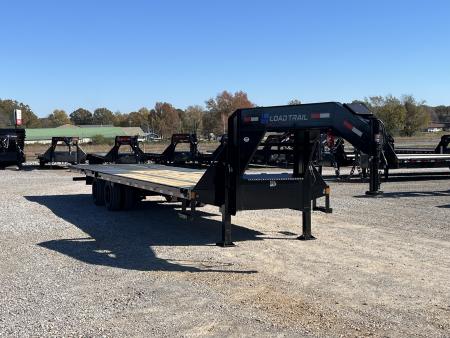
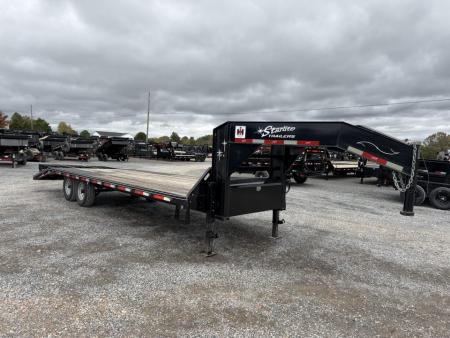
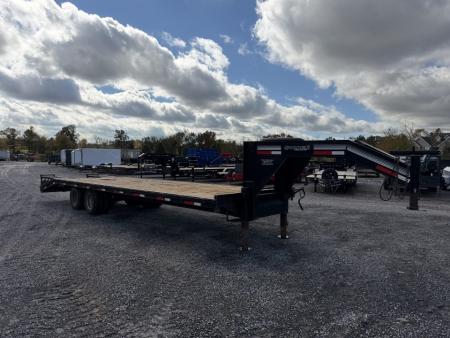
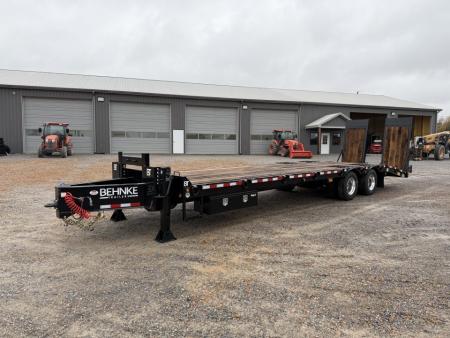
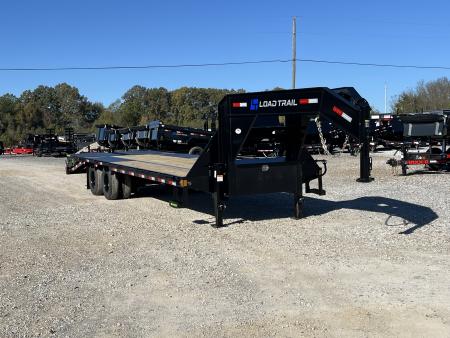
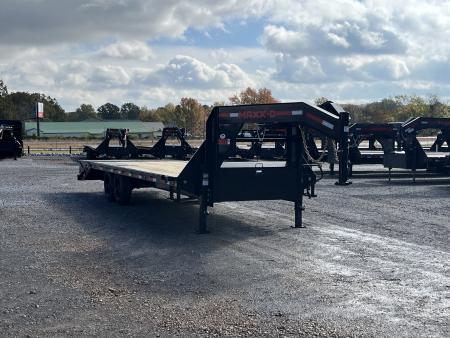
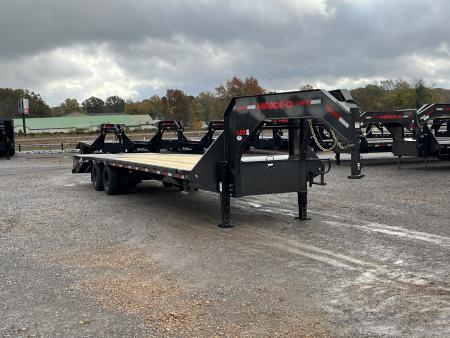
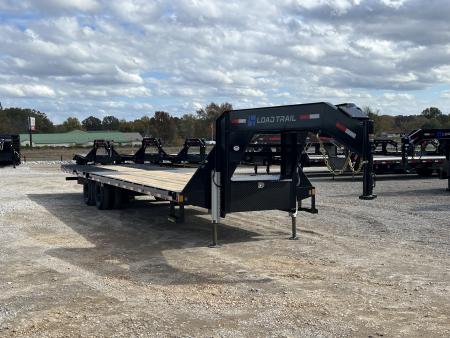
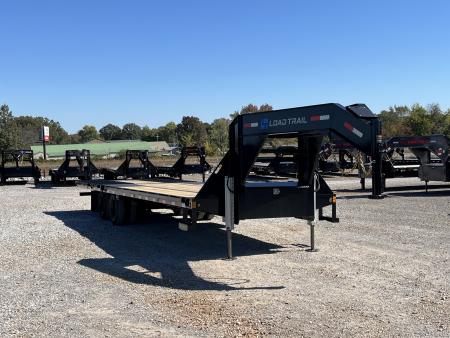
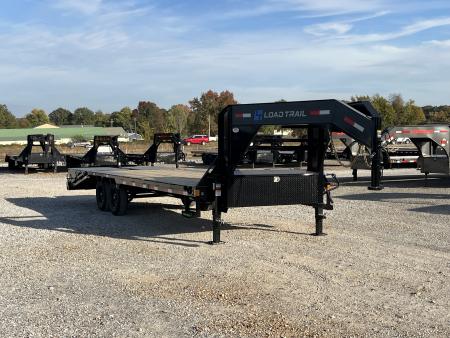
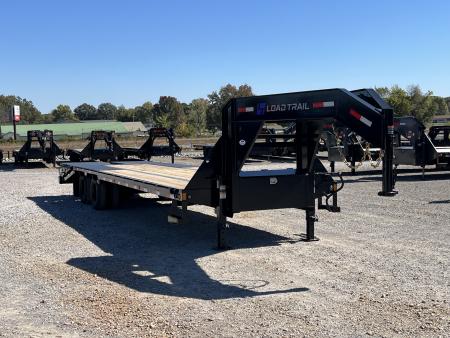
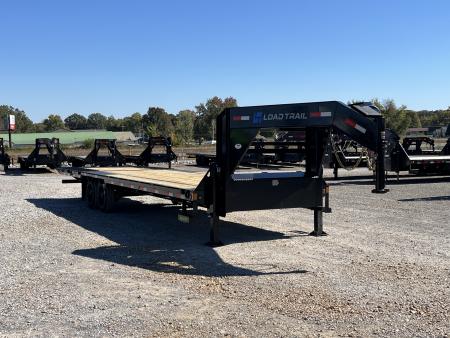
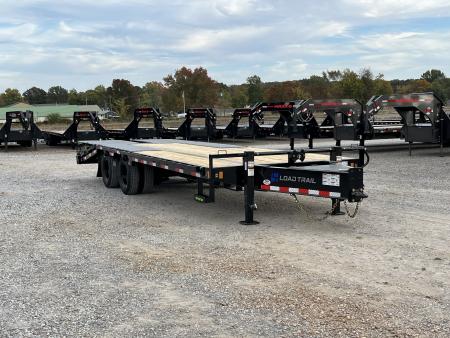
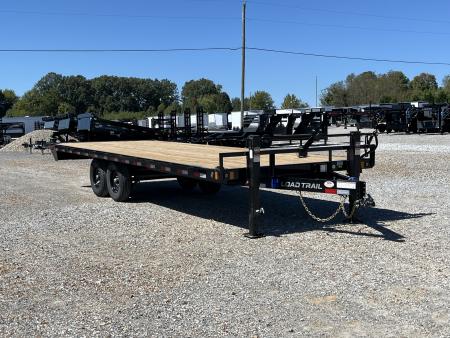
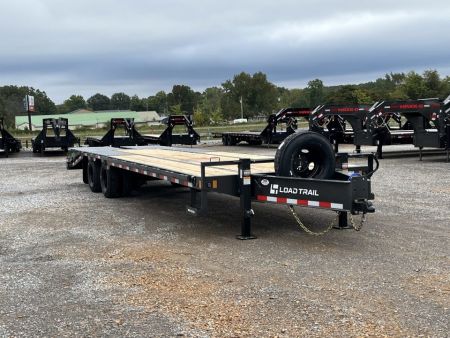
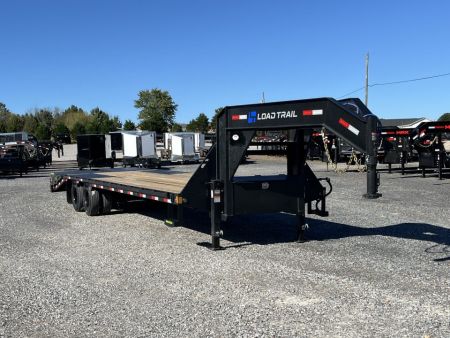
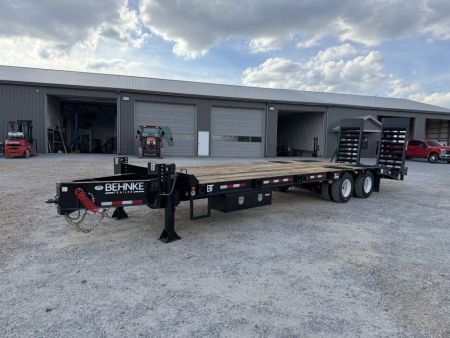
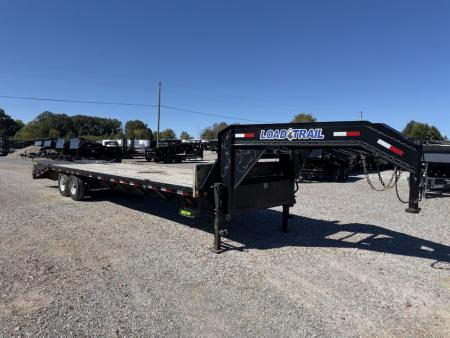
New and Used Flatbed Trailers in Kentucky
Whether you’re hauling a skid steer to a job site or hay to the back field, we stock flatbeds in a range of deck lengths, widths, and weight ratings. Contractors, farmers, landscapers, and commercial operators across Kentucky (and beyond) count on our inventory to find the right fit.
Our flatbed trailers are commonly used to haul:
- Construction equipment
- Farm machinery
- Building materials and pallets
- UTVs and ATVs
- Motorsports vehicles
- Commercial cargo
Every listing includes full specifications, so you can compare deck size, GVWR, axle setup, hitch type, and features side by side.
Flatbed Trailer Types for Every Job
The right flatbed depends on what you haul and how you tow it. Our inventory includes:
- Bumper Pull Flatbed Trailers: A versatile choice for pickup owners hauling general cargo, pallets, building materials, and compact equipment.
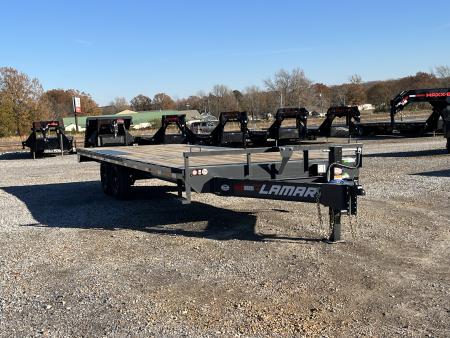
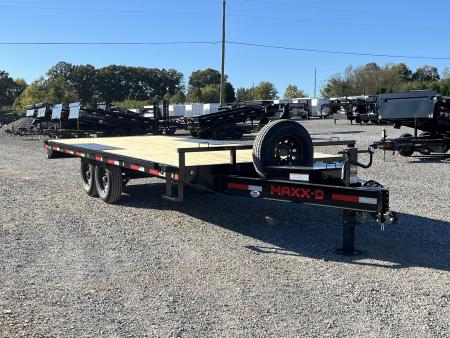
- Deck-Over Trailers: With the deck mounted above the wheels, deck-overs give you a full-width loading surface for wide equipment, oversized materials, and hay bales.
- Tilt Trailers: The deck tilts to the ground for easy loading of low-clearance equipment without separate ramps.
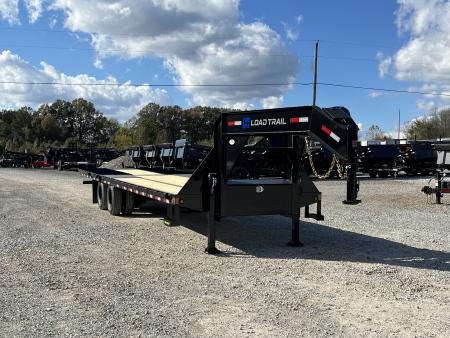
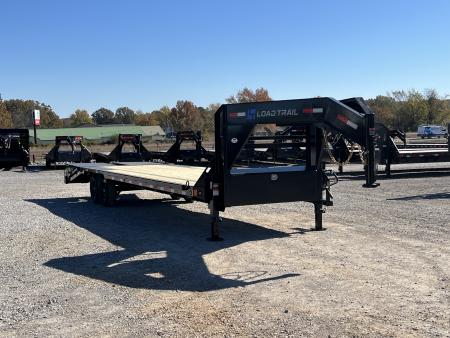
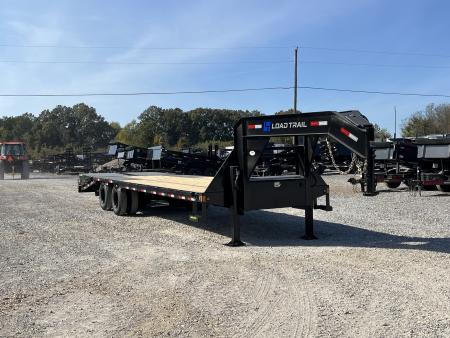
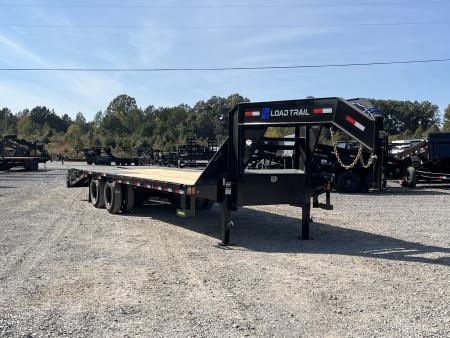
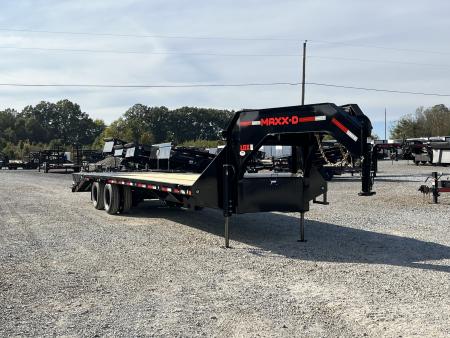
- Gooseneck Flatbed Trailers: Built for higher weight capacities and added towing stability, goosenecks handle heavy equipment, agricultural machinery, and large commercial loads.
- Pintle Hitch Trailers: Designed for heavy equipment such as backhoes, skid steers, and compact dozers.
We carry current models from trusted manufacturers, including MAXX-D, Load Trail, Lamar, Behnke, and Legend.
Flexible Financing Options for Qualified Buyers
Expert Help Choosing the Right Flatbed
Choosing the right flatbed means weighing cargo weight, deck size, hitch type, budget, and your tow vehicle’s capacity. Our team can help you compare models and narrow down the options that fit your work.
Have questions? Stop by our lot in Dexter, Kentucky, or contact us today.
FAQs
1. What are the best flatbed trailer brands?
The best brand depends on your cargo, budget, and how often you haul. We carry MAXX-D, Load Trail, Lamar, Behnke, and Legend, and our team can walk you through how they compare on build quality, deck options, warranty, and price.
2. What features should I look for in a flatbed trailer?
A flatbed has an open deck with no sides or roof, so it can be loaded from almost any direction. Key features to compare include:
- Deck material (treated wood, steel, or aluminum)
- Stake pockets and rub rails
- D-rings and other tie-down points
- Loading ramps or a dovetail
- Axle count and GVWR
- Electric or hydraulic brakes
- Toolbox and spare tire mount
3. How do you properly load a flatbed trailer?
- Safe loading comes down to weight limits, weight distribution, and securement.
- Inspect the trailer, tires, and lights, and confirm the load is within both the trailer’s GVWR and your tow vehicle’s towing capacity.
- Place about 60% of the load’s weight ahead of the trailer axles to keep tongue weight in the proper range and help prevent sway.
- Secure the load with rated straps or chains, using edge protectors on sharp corners.
- Recheck your straps after the first few miles and at every stop.
- For commercial hauling, follow FMCSA cargo securement rules.
4. What is the difference between a flatbed trailer and a normal trailer?
A flatbed trailer has an open-deck design with no sidewalls or roof. On the other hand, an enclosed trailer (such as a dry van or reefer) has a roof and rigid side walls.
| Difference | Flatbed Trailer | Normal Trailer |
|---|---|---|
| Loading & Unloading | From the sides, rear, or above with a forklift or crane | Through the rear or side doors |
| Cargo Protection | Open deck; may need tarps for weather protection | Fully enclosed for protection from weather and theft |
| Cargo Versatility | Can carat kiads wider or tallet than the deck, within legal limits | Limited to the size of the interior |
| Best for | Heavy, oversized, or irregularly shaped cargo. | Tools, small equipment, and cargo needing protection |